








6 License Plate Reader Myths vs. Facts: What LPR Does and Doesn’t Do
Do license plate readers track your every move? Use facial recognition? Sell your data? These are the most common claims about license plate reader cameras, and each deserves a direct answer.

Below, we answer each myth with what Flock license plate reader (LPR) cameras actually do, what they don’t do, and the guardrails that help investigators use the technology responsibly, with resources to learn more about each topic.
MYTH 1: LPR Cameras Track Your Every Move
FACT: Flock LPR captures still images when a vehicle passes a camera. It cannot show where it traveled between sightings.
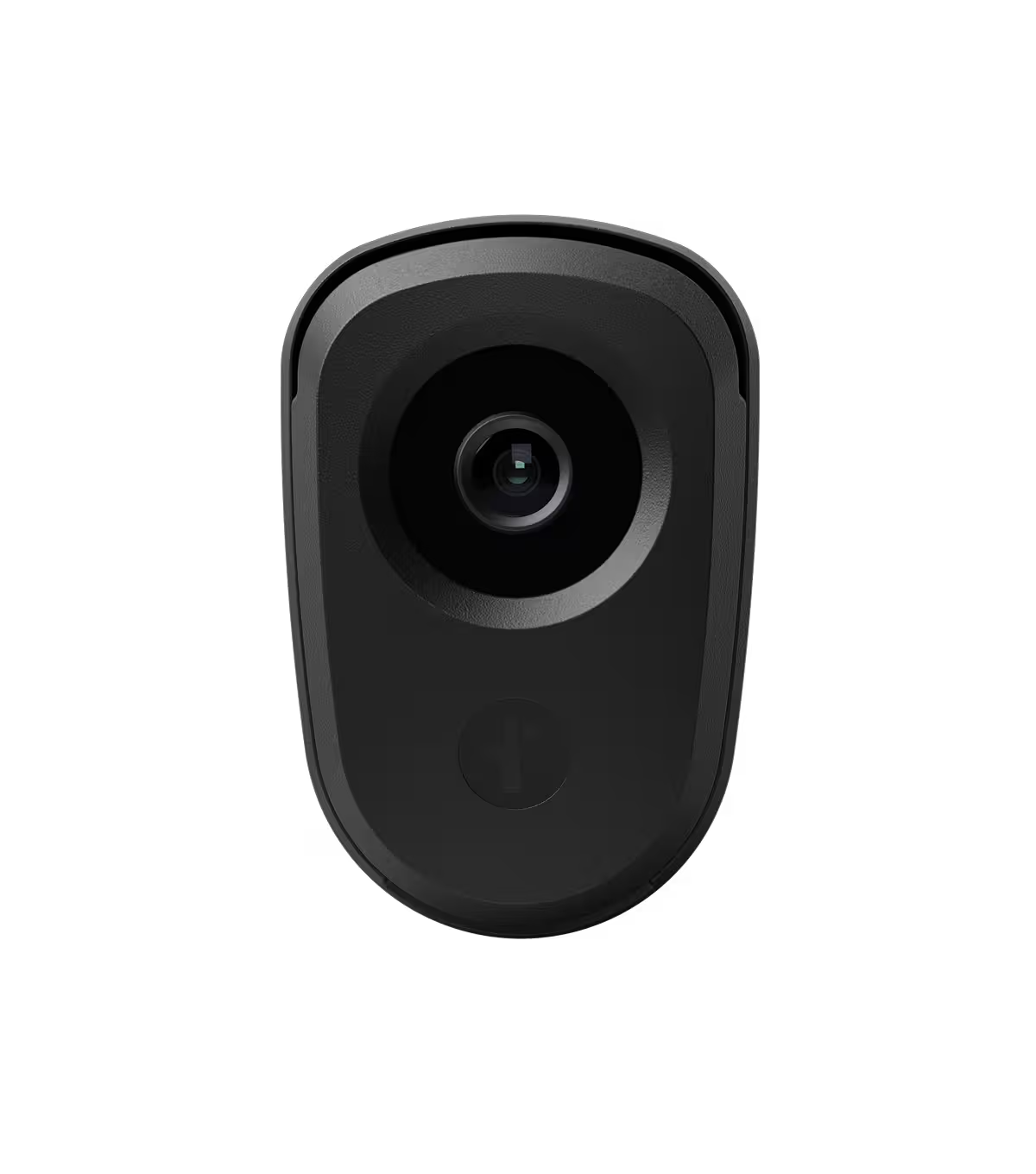
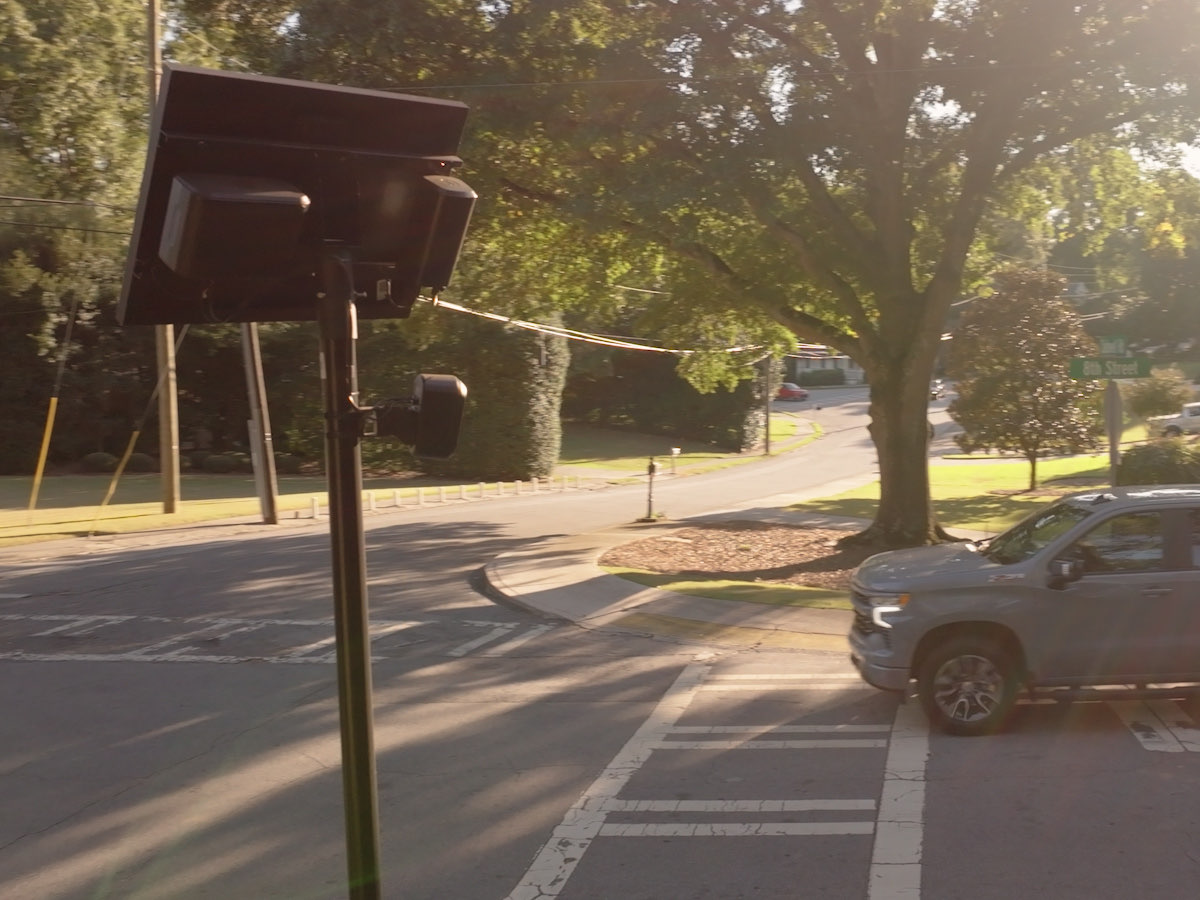
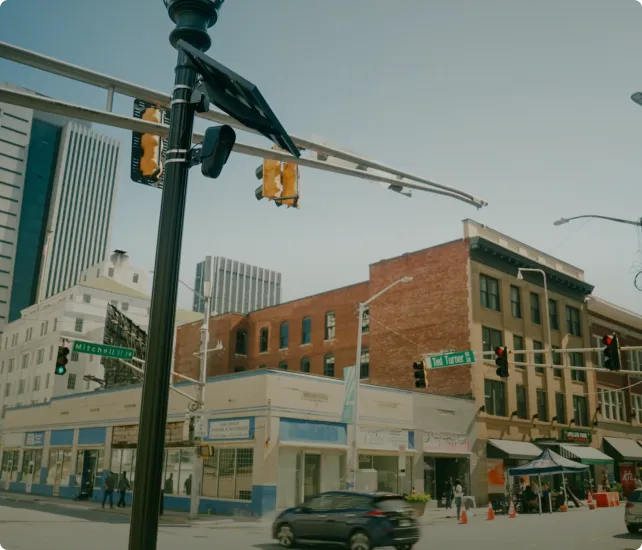
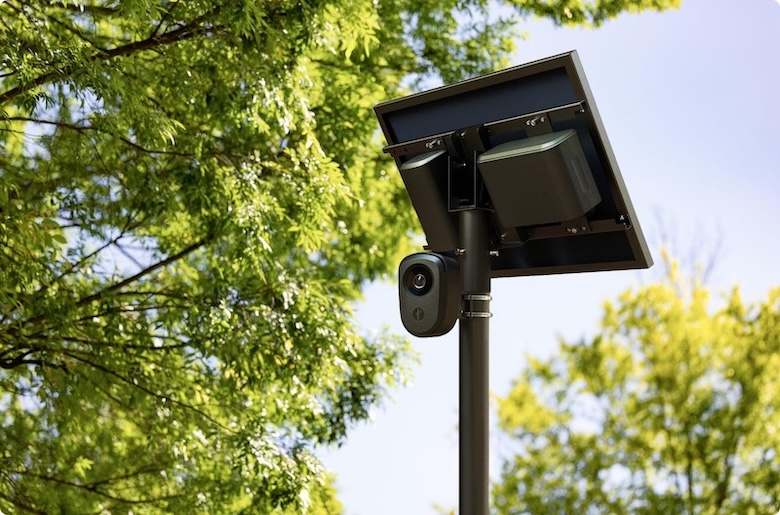
When a vehicle passes a Flock LPR camera, the camera captures a series of still images of the vehicle. Those images are processed for details such as the vehicle’s make, color, direction of travel, time, location, and, when visible, its license plate.
If the same vehicle passes another Flock camera, another image is logged. When viewed together, these images can help investigators understand where a vehicle was last seen. That gives them critical leads when looking for missing people, recovering stolen vehicles, or investigating violent crimes.
What happens between camera locations isn’t captured. Flock can’t continuously track a vehicle and cannot show where a vehicle traveled in between these individual sightings. Access to this data is controlled. Every search requires a documented reason and is logged and auditable.
In plain terms: Flock LPR captures images when a vehicle passes a camera. Flock cannot continuously track a vehicle.
Learn more: What Is Allowed and What Is Not Allowed
MYTH 2: LPR Cameras Use Facial Recognition
FACT: Flock LPR does not use facial recognition and cannot identify drivers or passengers.
Searches are based on vehicle details, not identity. Flock LPR does not collect:
- Facial recognition or biometric data
- Driver or passenger identity
- Race, religion, gender, ethnicity, or other personal traits
In plain terms: It captures still images of vehicles and cannot identify people.
Learn more: What Flock ALPR Does Not Do
MYTH 3: Flock Sells Your Data or Gives It to Federal Agencies
FACT: Flock does not sell customer data. Customers own their data and decide whether to share it with any partners. Nothing is shared automatically.
Each customer controls their own data, whether that’s a police department, an HOA, an apartment community, or a business. Sharing is off by default and happens only when a customer chooses to turn it on, under defined agreements.
For private customers such as neighborhoods and businesses, sharing with local police is a choice. It is only possible with law enforcement agencies that have a signed agreement with Flock. Private customers cannot access law enforcement data.
Flock does not work with U.S. Immigration and Customs Enforcement (ICE). ICE has no direct access to Flock cameras, systems, or data unless the agency that controls the data deliberately allows it. Cities can also restrict which types of offenses other agencies may search their cameras for. For example, a city could allow searches for stolen vehicles, missing persons, or violent crimes while blocking searches tied to immigration enforcement. There are no secret federal “backdoors.”
In plain terms: Nothing is shared unless the customer decides to share with another partner.
Learn more: Who Can Access Flock Data? & Does Flock Share Data With ICE?
MYTH 4: LPR Data Is Kept Forever, and Anyone Can Search It
FACT: Flock data deletes automatically after a set retention period defined by each customer. Access is limited to authorized users, and every search is logged.
Retention:
Flock now recommends and defaults to a 7-day retention period for new law enforcement customers. Existing law enforcement customers can keep the retention periods their communities previously approved. Private customers, such as HOAs and businesses, keep the retention terms set for their accounts, which they can review with their Flock team. In every case, data deletes on a schedule rather than being stored indefinitely. If specific data is needed for an active investigation, law enforcement customers can preserve it as evidence through Evidence Mode.
- Role-based access: Only approved users can log in, each with their own credentials. Multi-factor authentication is required for every Flock user.
- Purpose-bound searches: Searches require a documented reason. Flock is requiring case codes for all law enforcement searches by the end of 2026. Emergency searches are flagged for administrator review.
- Audit trails: Every search is recorded and tied to a specific user, so supervisors can review who searched, when, and why.
- Misuse detection: Audit Assistance flags unusual activity for review and will be required for all law enforcement customers by the end of 2026. Proactive lockout can suspend a user’s access automatically pending review.
- Encryption: Data is encrypted on the device, in transit, and when stored.
- Independent standards: Flock’s security controls are independently audited for SOC 2 Type II and aligned with ISO 27001.
- Transparency Portal: More than 1,500 agencies have also published a public Flock Transparency Portal. Anyone can see that agency’s policies, retention period, sharing partners, and search activity there.
In plain terms: You can’t search “just because,” and every search leaves a record.
Learn more: In August 2026, Flock announced platform-wide safeguard updates. These included the 7-day default for new law enforcement customers, mandatory MFA, required Audit Assistance and case codes, and an independent security review by Bishop Fox. Here’s what those updates mean for private sector customers.
MYTH 5: LPR Alerts Are Unreliable and Lead to Wrongful Stops
FACT: Flock LPR is built with several layers of accuracy checks, and an alert is a lead for human review, not a reason to act on its own.
Flock uses machine learning models trained on license plate designs from all 50 states, including stacked and undersized characters. Those models are retrained weekly as plate designs change. Flock LPR achieves:
- Over 98% plate capture
- Over 96% character-reading (OCR) accuracy
- Over 97% plate-state accuracy
Every read carries a confidence score. Low-confidence reads are labeled as such and are never sent as alerts to officers. Before an alert goes out, the Flock system matches both the plate and the issuing state against the hotlist record.
The final safeguard is human. Before acting, an officer visually confirms the plate and confirms the stop complies with law and agency policy. Together, these safeguards result in fewer than 9 human-reported errors for every 1 million alerts.
In plain terms: An alert is a lead for human review, not a conclusion.
Learn more: How an Automatic License Plate Recognition System Works
MYTH 6: LPR Cameras Don’t Actually Help Solve Crime
FACT: LPR doesn’t solve crimes on its own, but it gives investigators and communities the vehicle evidence that moves cases forward. Flock LPR supported more than 1 million investigations in 2025.
Many investigations can start with incomplete information: a partial plate, a witness description, and a rough time window. Flock’s Vehicle Signature technology can search by vehicle make, color, body type, and details like roof racks, bumper stickers, or damage. That turns a description into a lead someone can follow up on.
The results show up at scale. In 2025, Flock helped locate more than 10,000 missing people. In July 2026 alone, Flock helped locate over 1,000 missing people and over 20,000 stolen vehicles.
What This Looks Like:
- A child recovered in 30 minutes: In Lavonia, Georgia, officers responding to a domestic dispute used Flock cameras to locate a vehicle carrying a toddler who had been taken from their mother. Working with a neighboring sheriff’s office, they recovered the child safely about 30 minutes after the 911 call.
- A witness description becomes a plate number: In an Indianapolis neighborhood, a witness to a theft could describe only the vehicle’s make, color, and the approximate time. The HOA president used those details to find the vehicle using Flock and give police its license plate.
- Evidence after a break-in: In Sandy Springs, Georgia, a resident’s car was broken into, and valuables were taken. The neighborhood’s new Flock LPR camera located at the entrance captured the suspect’s vehicle leaving, giving police the evidence they needed to pursue the case.
Crime doesn’t stop at a city line. Neighborhoods, apartment communities, businesses, schools, and houses of worship use Flock LPR to protect their own property and residents. When they choose to share with local police, their cameras can help solve cases within and beyond their entrance.
Frequently Asked Questions
Do Flock cameras use facial recognition?
No. Flock LPR captures vehicle images at a specific location and time. It does not use facial recognition, collect biometric data, or identify drivers or passengers.
Does Flock track people?
No. Flock LPR captures images of vehicles and cannot identify people. When a vehicle passes multiple cameras, the separate sightings can show where it was last seen, but not where it traveled in between.
Does Flock sell data or share it with ICE?
Flock does not sell customer data and does not work with ICE. Customers own their data and control sharing, which is off by default.
How long does Flock store license plate data?
New law enforcement customers default to 7-day retention. Existing agencies keep the periods their communities approved and can adjust them, and private customers keep the retention terms set for their accounts. In all cases, data is deleted automatically after the retention period unless preserved as evidence for a specific case.
Who can search Flock data?
Authorized users with role-based access and multi-factor authentication can search their data. Every search requires a reason and is logged to a specific user for review.
How accurate are Flock license plate readers?
Flock LPR achieves over 98% plate capture and over 96% OCR accuracy. Alerts are filtered for confidence and visually confirmed by an officer before any action.
Does Flock actually help solve crime?
Yes. Flock LPR supported more than 1 million investigations in 2025 and helped locate more than 10,000 missing people.
Get the Facts for Your Community
Have more questions about how LPR works, who controls the data, or how it’s governed? Visit the Flock Trust Hub for direct answers.


Protect What Matters Most.
Discover how communities across the country are using Flock to reduce crime and build safer neighborhoods.